

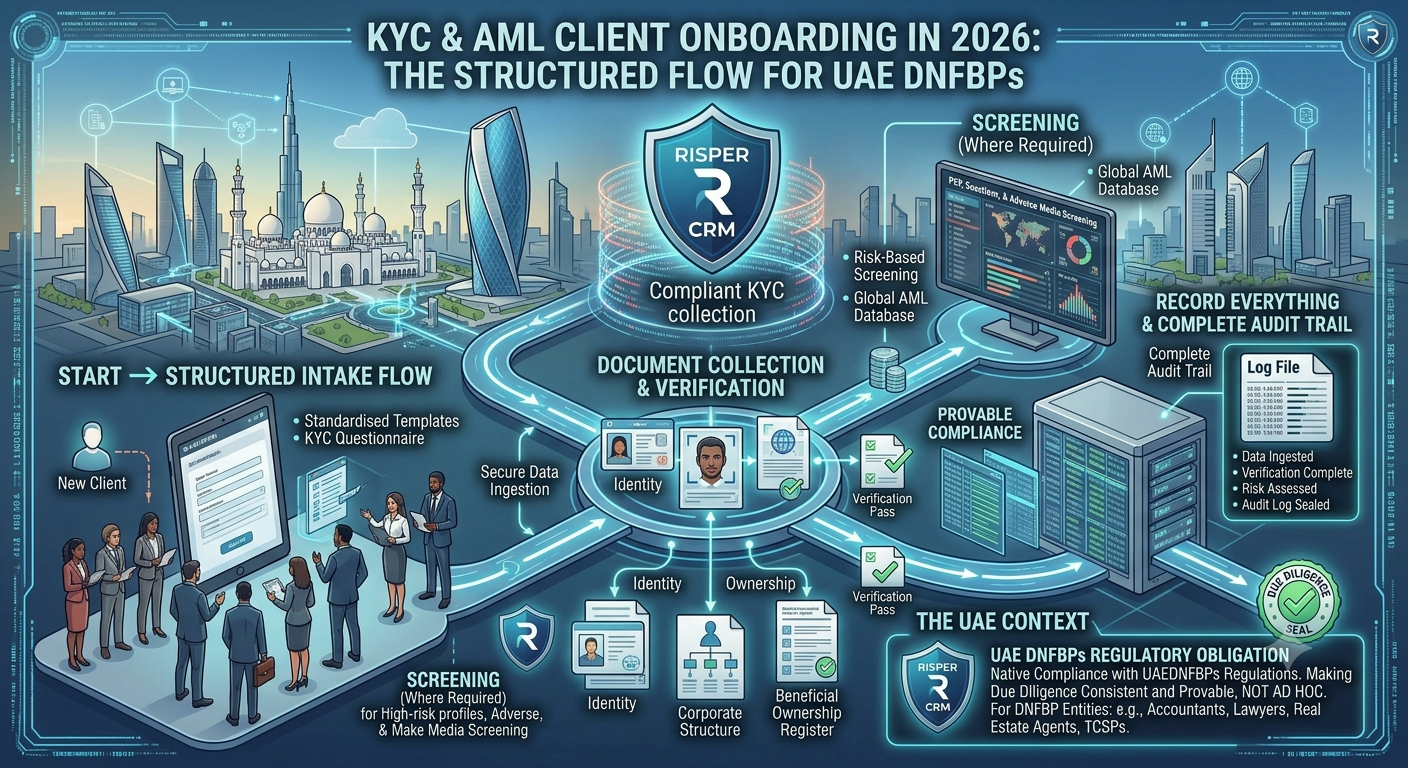
The best KYC and AML client onboarding practices in 2026 collect required identity and ownership documents within a structured intake flow, verify them, screen where required, and record everything with a complete audit trail — making due diligence consistent and provable rather than ad hoc. For UAE DNFBPs, this is a regulatory obligation, not a choice. Risper CRM builds compliant KYC collection
Why KYC and AML belong at onboarding
The right time to perform customer due diligence is at the start — before you begin work and before risk attaches to your firm. Trying to collect KYC after onboarding means chasing clients who've already started, with incomplete records and compliance gaps. Building KYC into onboarding makes it a natural, unavoidable step.
The practices that define good KYC onboarding
Strong practice means: a structured intake that specifies exactly which documents are required; in-flow collection so clients provide them as part of signing up; verification of what's collected; appropriate screening where the regime requires it; and a complete, timestamped record of every step. The aim is that due diligence is done the same way for every client, every time.
Consistency and audit trail are everything
The difference between adequate and excellent KYC is consistency and evidence. Done by hand, due diligence varies by who did it and what they remembered to collect. Done through a system with required fields and an audit trail, it's uniform and provable. When a regulator reviews your AML compliance, consistency and a clear record are what they're looking for.
The UAE DNFBP context
In the UAE, Designated Non-Financial Businesses and Professions — including many accounting, audit, and corporate-service firms — have explicit customer due diligence and record-keeping obligations, and report through goAML. Onboarding that captures and stores KYC with an audit trail directly supports these obligations and reduces the manual risk of falling short.
How Risper CRM supports KYC and AML onboarding
Risper CRM collects required KYC documents within a structured onboarding flow, records every step with a timestamped audit trail, and stores everything with in-region data residency — making due diligence consistent and provable for every client. For UAE DNFBPs, it turns an AML obligation into a routine, repeatable part of signing a client.
Frequently asked questions
When should KYC be performed? At onboarding, before work begins — collecting it afterward means chasing clients and risking incomplete records.
What makes KYC onboarding compliant? Structured collection of required documents, verification, screening where required, and a complete, consistent audit trail.
Why does the UAE care about this specifically? Because DNFBPs have explicit due-diligence and record-keeping obligations and report through goAML.
See compliant KYC onboarding: [Book a Risper CRM demo — demo link].